
I've killed more rosemary plants on windowsills than I care to admit. The truth? Most herbs we love outdoors turn into expensive compost when we drag them inside. They want wind, real soil, and temperature swings that our cozy homes just can't provide.
But three herbs actually prefer the controlled environment of your kitchen. Basil, chives, and parsley will not only survive indoors, they'll give you fresh leaves all winter long if you treat them right.
Why Most Herbs Hate Your House
Read also
Indoor air is stagnant. Your heating system creates hot, dry conditions that stress Mediterranean herbs like rosemary, thyme, and oregano. These plants evolved on hillsides with constant breezes and dramatic day-night temperature differences.
Add in overwatering (because the soil never dries out properly indoors), and you get root rot. Then there's the light issue. Even your brightest window delivers maybe 10% of what these sun-lovers get outside.
The herbs that do well indoors come from different backgrounds. They're either tropical plants that like consistent conditions, or they're naturally adapted to shadier, more humid environments.
Basil: The Indoor Superstar
Basil originated in tropical Asia, where temperatures stay warm and humidity runs high. Your heated home mimics those conditions better than your outdoor garden does.
Start with a 6-inch pot and quality potting mix, not garden soil. Garden soil compacts in containers and holds too much water. Place your basil in the brightest window you have, preferably south-facing.
Water when the top inch of soil feels dry. Basil likes consistent moisture but hates wet feet. If leaves start yellowing from the bottom up, you're overwatering.
Pinch off flower buds as soon as they appear. Flowers signal the plant to stop making tender leaves and start setting seed. Keep pinching, keep harvesting.
Pro Tip
Pro Tip: Genovese and African Blue basil varieties handle indoor conditions better than sweet basil. They're more forgiving with watering and lower light levels.
Chives: The Easiest Win
Chives are practically weeds. They'll grow in a closet if you give them a tiny bit of light. These onion relatives actually prefer cooler conditions, making them ideal for rooms that don't get blazing hot.
Plant chives in any container at least 4 inches deep. They don't need much root space but they do need drainage. A simple terracotta pot works beautifully.
Cut them like grass. Snip the green tubes about an inch above the soil line, and they'll regrow within weeks. Don't harvest more than one-third of the plant at once, but other than that, chives are nearly indestructible.
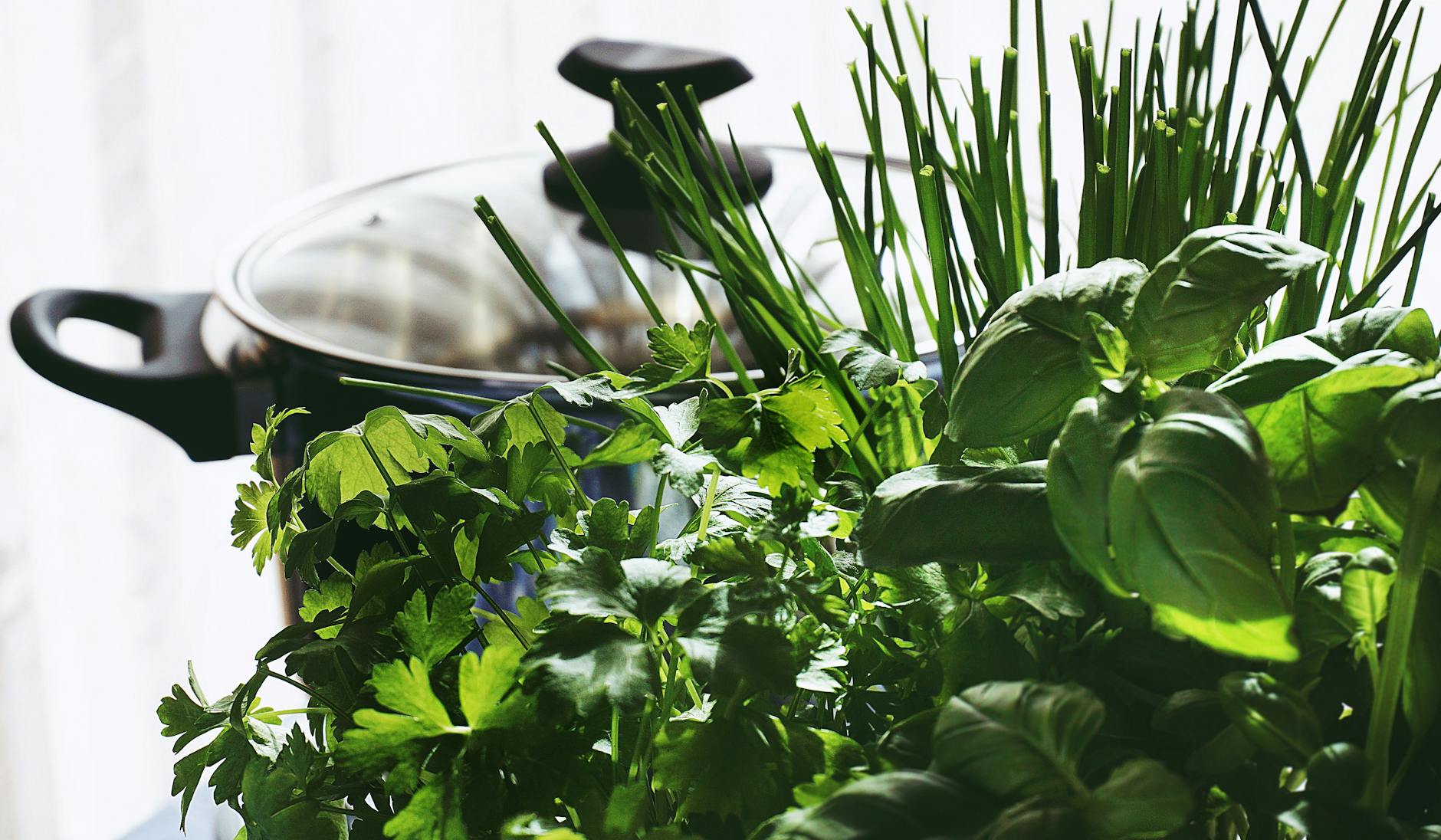
They'll even tolerate some neglect. Miss a watering? Chives bounce back. Forget to fertilize? They don't care much.
Parsley: The Winter Workhorse
Flat-leaf parsley handles indoor life better than the curly variety. It's naturally adapted to partial shade and doesn't mind the lower light levels of most homes.
Use a deep container, at least 8 inches. Parsley grows a taproot and gets cranky in shallow pots. The plant will survive, but the leaves stay small and bitter.
Harvest outer leaves first, leaving the center crown intact. This keeps the plant producing new growth instead of going to seed. Unlike basil, parsley actually benefits from having some older leaves left on the plant.
Parsley grows slowly indoors, especially in winter. Don't expect the rapid growth you get outside in spring. Plan on harvesting a few sprigs at a time rather than big bunches.
Setting Up for Success
All three herbs need well-draining potting mix and containers with drainage holes. Skip the decorative pots without holes, they're death traps for herbs.
Feed lightly once a month with liquid fertilizer diluted to half strength. Indoor herbs grow slowly and don't need heavy feeding. Too much fertilizer creates lush, weak growth that attracts pests.
Watch for aphids and spider mites, especially in winter when indoor air is dry. A weekly shower in the sink helps prevent pest problems and keeps leaves clean.
Start fresh each spring. Even the best indoor herbs get leggy and tired after a winter inside. Compost them when warm weather returns and start over with new plants or seeds.


